


Professional Testing Translates to Excellent Field Performance of Conduit Adhesive
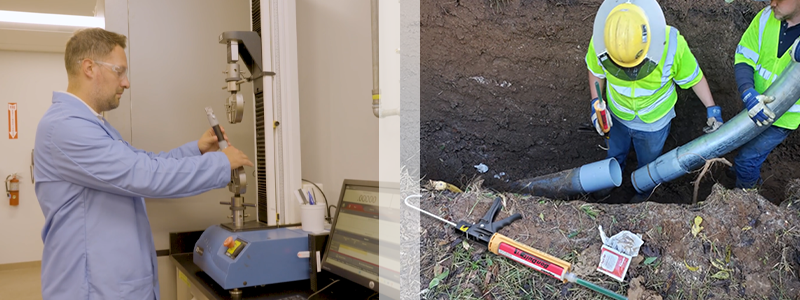
Laboratory testing predicts field performance by directly reflecting application parameters, including temperature ranges, spatial constraints, and adhesive performance requirements. For conduit adhesives, Polywater uses a testing sequence defined by field requirements to optimize the product and package performance.
- Field application:
Packaging and kitting are designed to simplify the application process and minimize errors. There are fewer measuring and mixing steps required, resulting in better job-site efficiency. Side-by-side or coaxial cartridges fitted with static mixers allow fast and clean application.
- Adhesion to dissimilar materials:
Conduit adhesive is often used at material transition points where steel or fiberglass conduit are bonded to PVC. A good conduit adhesive must have excellent adhesion to all these materials, regardless of the pairing.
- Extreme environmental and temperature performance:
While in-ground joints will experience limited temperature swings, some above ground joints are exposed to extreme temperatures. In specialty applications, some joints may experience chemical exposure.
- Pullout strength:
Once bonded, joints must meet industry and application standards for pull-out strength. The strength requirement depends on the conduit size, and function of the joint.
Standardized Tests Are a Good Starting Point
Standardized testing organizations such as ASTM, ANSI, IEC, ISO, and ITU create test methods and technical standards designed by committees comprised of experts in the field. These tests are a good place to start when designing a testing protocol. As an example, ASTM International has developed over 12,000 standards over 125 years.
Measuring Shear Strength and Adhesion Properties
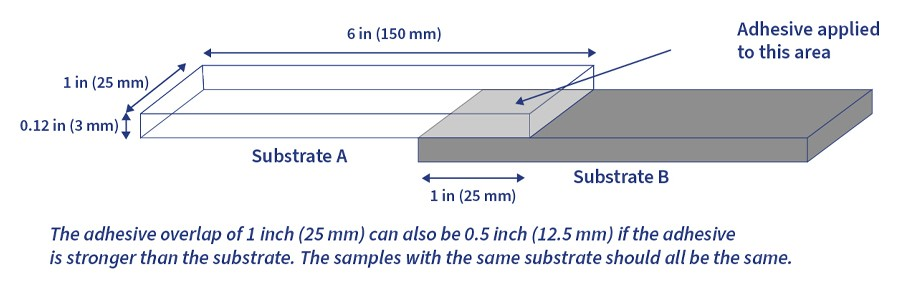
Polywater utilizes the ASTM D1002 “lap shear” test to measure the shear strength of adhesives by pulling apart two bonded, overlapping substrates. This method isolates the interaction between the adhesive and substrate, minimizing distortion to ensure accurate adhesion results. While the standard specifies metal, we substitute rigid materials like conduit or coupling substrates—using either identical or dissimilar materials—to reflect field conditions.
Retention of Shear Strength Can Be Used to Measure Chemical Resistance
Lap shears may be used to measure loss of bond strength after exposure to chemical agents. In one study, lap shear samples were submerged in a variety of chemical reagents for 28 days and then tested in comparison to the control samples.
Retention of Shear Strength Can Be Used to Measure Chemical Resistance
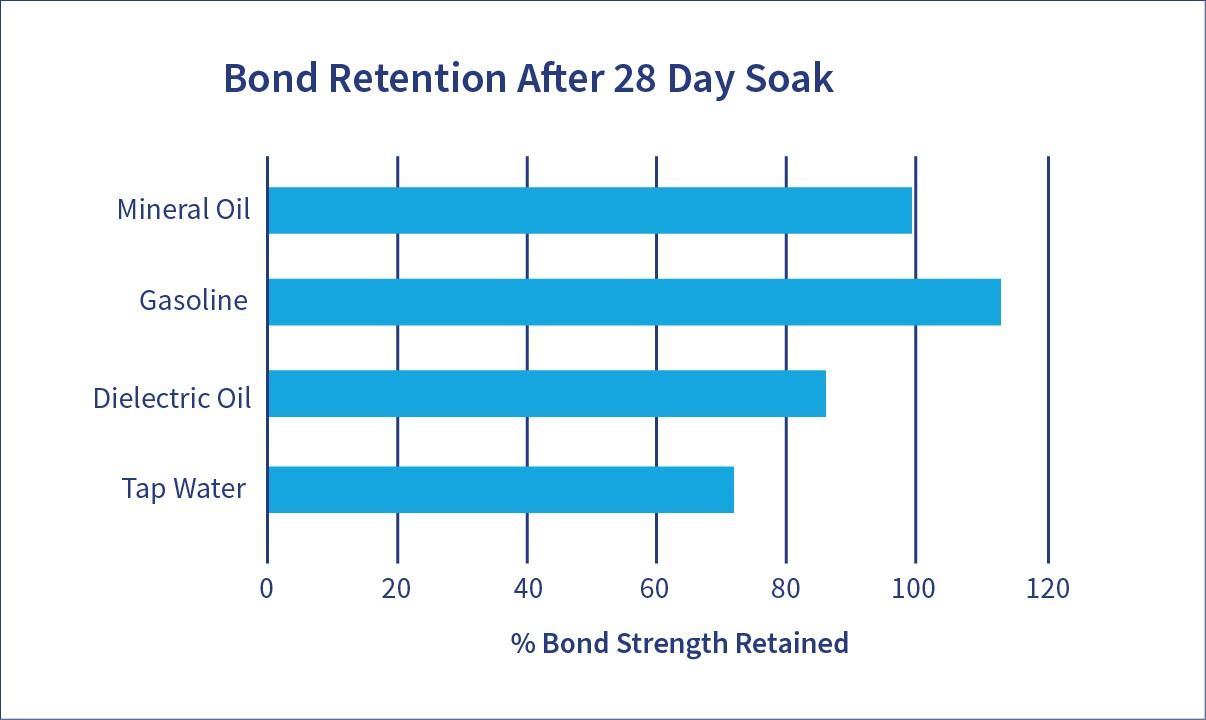
Lap shears may be used to measure loss of bond strength after exposure to chemical agents. In one study, lap shear samples were submerged in a variety of chemical reagents for 28 days and then tested in comparison to the control samples.
Shear Strength Tests Can Measure Environmental Performance
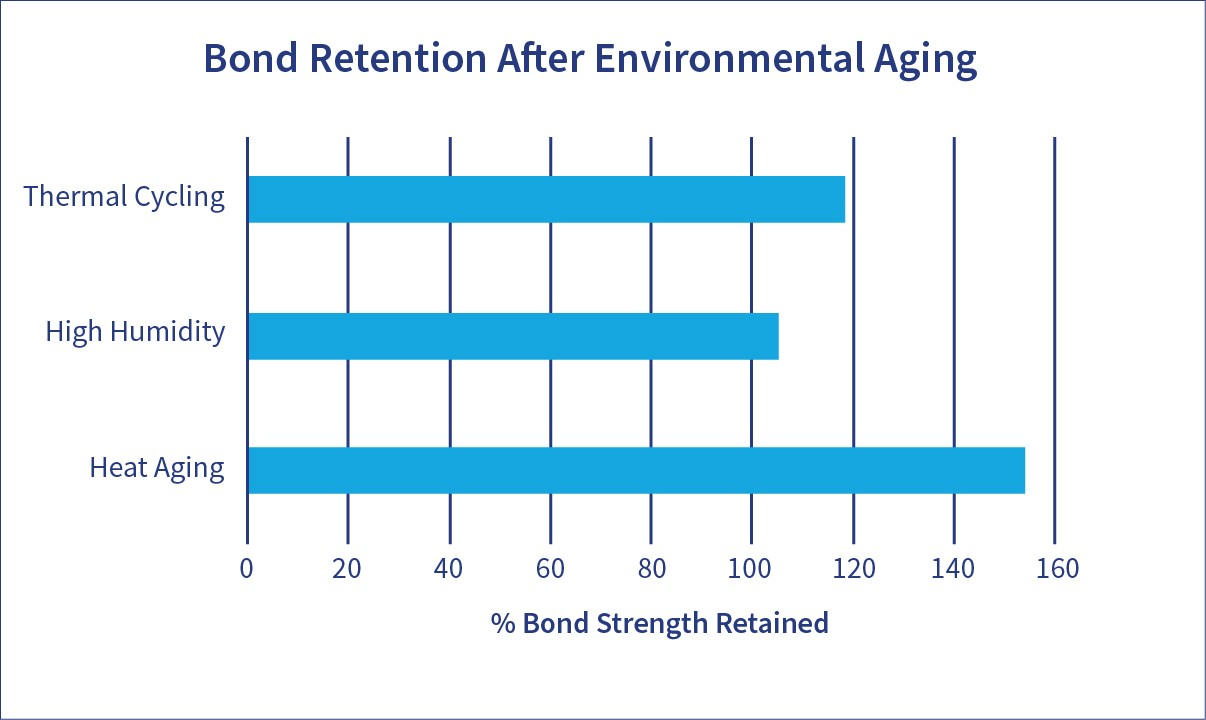
In many cases, such as meeting UL requirements, lap shears can determine any change in bond strength following exposure to temperature and humidity extremes. For heat aging, samples were conditioned for 1,000 hours at 104ºC. High humidity samples were conditioned at 60ºC, 95-100% RH for 7 days.
Connecting Laboratory Testing to Pullout Performance
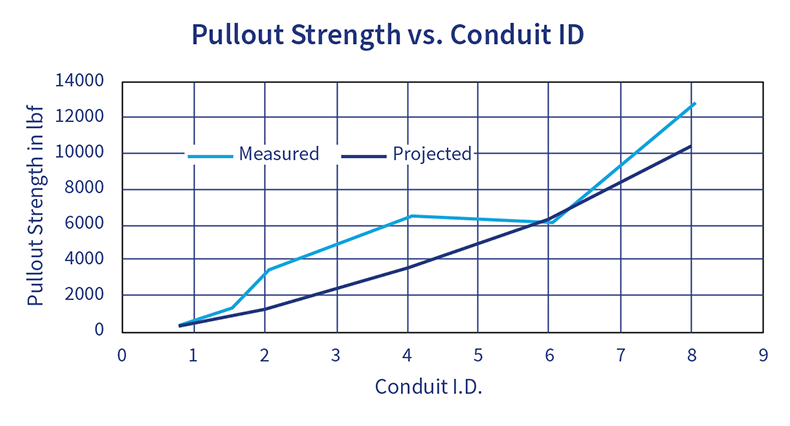
While lap shear values can theoretically predict pullout strength, the complex geometry and variable adhesive film thickness caused by tapered couplings make direct measurement more accurate. Factors such as seating difficulties with conduits 6 inches or larger further complicate these predictions. Polywater compares actual pullout strengths to lap shear projections. Polywater Bonduit results show strengths ranging from several hundred to several thousand pounds force. Regardless of size, maximizing pullout force requires proper surface preparation, including abrading and solvent cleaning.
Summary
Laboratory testing should reflect field use. A good conduit adhesive should adhere to all types of conduit materials, be easy to apply, withstand varied environmental conditions, and have excellent pullout strength.
Standard tests, as well as modifications on these tests, are a good way to develop products and understand performance. Polywater has developed new test methods that better describe the actual use of a product. This rigorous testing creates product consistency for an outcome you can trust.